Do you feel more confident being in control of your contraception? Same here. When it comes to your reproductive health, you deserve to be educated and empowered 24/7. Each step of the way, you should feel equipped with the right information — and with unrestricted access to choice.
After all, you should be able to ask yourself "what birth control is best for me?" — and get answers from sources you trust.
Let's explore the different forms of birth control out there. Not sure where to start? No problem — we cover what to ask your doctor to find the right fit for you, too.
What is Birth Control?
Birth control, also known as contraception, refers to methods used to prevent pregnancy. From convenient over-the-counter contraception to Intrauterine Devices (IUDs) and more, there are plenty of birth control options out there. In general, all methods of birth control are most effective at preventing pregnancy when used as directed.
Whether you're new to birth control or looking to try a different method, be sure to consult with your doctor or healthcare provider to find the right birth control method for your unique needs.
What are the different types of birth control?
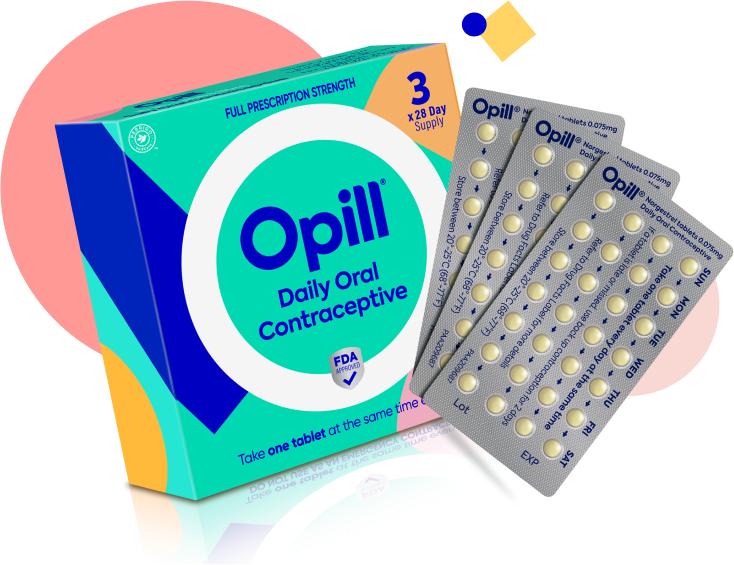
There are many different types of contraception out there, including barrier methods, hormonal methods, and fertility awareness methods (FAMs). Some methods require a prescription and a doctor's visit, while some barrier methods are available without a prescription. In fact, Opill® is the only progestin-only daily birth control pill available without a prescription at local retailers in the US.
From the moment you start menstruating all the way to menopause, choosing a birth control method is a deeply personal decision. Remember: everyone is different, and what may work for your unique lifestyle, habits, and preferences may not work for others.
If you need help deciding, consult with your doctor or preferred healthcare provider. They can offer personalized advice based on your individual lifestyle, unique needs, and reproductive plans. Plus, they can help you decipher the pros and cons of each option so you can make an informed decision.
The main types of birth control include:
Barrier Methods
Barrier methods are a specific type of contraceptive designed to prevent pregnancy by physically blocking sperm from reaching an egg. Barrier methods are ideal for people who can't use hormonal contraception. Unlike hormonal methods, barrier methods do not use the hormones estrogen or progestin.
Common barrier methods include condoms, diaphragms, sponges, and even cervical caps that prevent sperm from reaching the egg. Certain barrier methods, like condoms, can also help prevent sexually transmitted diseases (STDs). While cervical caps and some diaphragms require fitting by a healthcare provider, most barrier methods do not require a prescription.
Let's explore some common barrier methods:
Male Condoms
are worn over the penis during intercourse. Usually made from latex, non-latex condoms made of polyurethane or polyisoprene are also available. Male condoms also protect against STDs.
Female condoms
are inserted into the vagina before intercourse and are usually made of nitrile, so can be used by people with latex allergies. Female condoms protect against STDs.
Spermicides
are chemical products that destroy sperm on contact and are often used at the same time as other barrier methods. Spermicides are typically available in creams (for use with diaphragms), film, gel, foam, or suppository form. Spermicides do not protect against STDs.
Vaginal Diaphragms
are dome-shaped cups that are usually made of latex or silicone and nylon. Diaphragms are inserted into the vagina to cover the cervix and are typically used with spermicide to improve effectiveness. Diaphragms do not protect against STDs.
Cervical Caps
are a deep silicone cap similar to diaphragms but a bit smaller to fit tightly over the cervix to help prevent pregnancy. Cervical caps are often paired with spermicide. Cervical caps do not protect against STDs.
Contraceptive Sponges
are a barrier method of birth control made of soft polyurethane foam and are inserted into the vagina before intercourse to help prevent pregnancy. The sponge also contains a spermicide. Contraceptive sponges also do not protect against STDs.
How effective are barrier methods? Barrier methods tend to be less effective than hormonal birth control alternatives because of the potential for incorrect use or breakage. Be sure to use barrier methods correctly every single time you have sex to reduce the risk of pregnancy.
As always, it's best to discuss options with your doctor or healthcare provider to help determine the right method for you based on your health, family planning, and lifestyle goals.
Hormonal birth control methods
The patch, vaginal ring, pill, and birth control shot prevent pregnancy by stopping the ovaries from releasing eggs or stopping sperm from reaching the egg. To make your birth control method the most effective, be sure to use it as directed.
It's also important to note that hormonal birth control methods do not protect you or your sexual partner from Sexually Transmitted Diseases (STDs), but you can use a condom in addition to your preferred hormonal birth control to help protect against STDs.
Here are a few common hormonal birth control methods:
Birth Control Pills: COCs and POPs
As one of the most popular choices for women globally1, the birth control pill (oral contraceptive pill) is a daily hormonal contraceptive used to prevent pregnancy. There are two main types of hormonal contraception pills: Combined Oral Contraceptives (COCs) and Progestin-Only Pills (POPs).
COCs, or combination pills, contain two hormones, estrogen and progestin while POPs, also known as "mini-pills," contain only the hormone progestin. Remember: the birth control pill is taken every day, ideally at the same time each day.
Birth control patches
A birth control patch is a thin, square patch containing the hormones estrogen and progestin that sticks to the skin and continuously releases the hormones progestin and estrogen into the bloodstream. Similar to combination birth control pills (COCs), the hormones in the birth control patch prevent pregnancy by preventing ovulation. The patch also thickens cervical mucus to keep sperm from reaching an egg.
You usually wear a patch for a total of 21 days, placing a small patch on your skin once a week for three weeks. During the fourth week, you don't wear a patch which allows for menstrual bleeding. Be sure to read the product label for your preferred birth control method and use it as directed.
Vaginal ring
The vaginal ring, also known as the birth control ring, is a flexible, transparent ring that is inserted into the vagina that requires a prescription. When inserted correctly, the ring releases a continuous, low dose of estrogen and progestin hormones. These hormones work similarly to other hormonal contraceptives by preventing ovulation and it may also thicken cervical mucus and thin the uterine lining.
As always, be sure to read the relevant product label and use the vaginal ring as directed. In general, the ring is inserted into the vagina, where it stays for three weeks. During the removal period, the ring is removed for a one-week break after three weeks of use, when a period usually happens. Once the ring-free week is complete, a new ring is inserted to start the next cycle.
Injectable contraceptives
Injectable birth control, also known as the birth control shot, is an injectable form of birth control. This hormonal contraceptive option is a shot that's administered regularly- every three months (12 to 13 weeks). The shot contains a type of progestin hormone that is usually injected into the upper arm or buttocks.
Contraceptive implant
The contraceptive implant, also known as the birth control implant, is a long-acting, contraceptive. The contraceptive implant is a flexible rod inserted under the skin of the upper inner arm to prevent pregnancy. The implant prevents pregnancy by releasing progestin which prevents ovulation and also thickens the cervical mucus to make it more difficult for sperm to get to an egg.
It provides effective birth control for Non-Hormonal Copper IUDs the presence of the IUD creates a hostile environment for the sperm. The IUD interferes with the sperm's ability to move and prevents it from fertilizing an egg. They can last for 3-10 years.
Fertility Awareness Methods (FAM)
Fertility awareness, which is also known as natural family planning, the calendar method, or the rhythm method, is a specific method of preventing or facilitating pregnancy by tracking your menstrual cycle and fertile days to identify when you're most likely to conceive. Remember: fertility awareness methods do not offer protection from sexually transmitted diseases (STDs).
What is the Calendar Method?
Also called the calendar rhythm method, the calendar method is one type of natural family planning. The calendar method helps you estimate when you're most likely to conceive by tracking your menstrual cycle on a calendar to predict when you'll ovulate. Before you start using the calendar method as birth control, you should have been tracking the length of your menstrual cycles for at least 6 periods.
Some people also use the calendar method to determine which days to avoid unprotected sex to avoid pregnancy. However, using the calendar method for birth control requires very detailed record keeping. Fertility apps often follow the calendar method and help track menstrual cycles as well as ovulation.
You must update your calculations every month and continue recording the length of your cycle to ensure you're accurately determining your fertile days.
What is the Cervical Mucus Method?
The cervical mucus method involves recognizing and tracking specific changes in vaginal discharge – also known as your cervical mucus – to determine when you may be ovulating. To chart your cervical mucus, you keep track of the amount, texture, and color of your cervical mucus each day. In general, just before ovulation the amount of cervical mucus increases noticeably and becomes thin and slippery and more wet, like raw egg whites. If you're hoping to prevent pregnancy, you should avoid sexual intercourse or use a barrier method of birth control when you first notice any cervical mucus.
Be sure to talk to your healthcare provider for advice if you think your cervical mucus never reaches a fertile stage or you need help recognizing changes in your cervical mucus.
What is Basal Body Temperature (BBT) Tracking?
Basal Body Temperature (BBT) tracking can help you estimate when you're most likely to get pregnant during ovulation.
Your BBT is your lowest natural body temperature while you're fully at rest. Hormone levels usually fluctuate during your menstrual cycle, which causes your BBT to drop approximately 1-2 days before you ovulate and then increase slightly the day after you ovulate.
Basal Body Temperature (BBT) tracking works by recording your BBT for a minimum of three menstrual cycles using a special basal thermometer. It requires taking your temperature as soon as you wake up each morning and tracking it. While it may be difficult to predict exactly when you're ovulating, measuring your base temperature may help you tap into a pattern.
When you ovulate, your BBT may increase slightly — typically less than a 1/2 degree Fahrenheit (0.3 Celsius). If you notice the temperature remains steady for three days or more, ovulation has likely happened.
You can use your tracking information to guess when you're likely to ovulate. Then, you can either have sex (or avoid it) on the days before and just after ovulation depending on your specific goals.
What is abstinence?
Sexual abstinence involves refraining from engaging in sexual activity. In terms of contraception, it means avoiding vaginal intercourse. Some people may choose sexual abstinence for various reasons, including religious beliefs, personal values, or to prevent pregnancy or sexually transmitted diseases (STDs).
What is emergency contraception?
Emergency contraception is a specific contraception method that can be used to prevent pregnancy after unprotected sexual intercourse. Emergency contraception is a safe way to prevent pregnancy up to 5 days after unprotected sex; the sooner you use or take emergency contraception, the more effective it can be.
There are two different kinds of emergency contraception:
Emergency contraceptive pills (ECPs)
, also known as the morning after pill, are a type of birth control that can be used in emergency situations. Individuals may choose to use ECPs when a standard birth control method wasn't used, birth control failed, or in the event of non-consensual sexual intercourse (rape).
Whether you need a doctor for the morning-after pill really depends on the type of pill you plan to take. For example, Levonorgestrel tablets – including Plan B®* – is generally available over the counter at pharmacies without a prescription for people of any age. On the other hand, ella® is a prescription emergency contraceptive pill that is effective up to 5 days after unprotected sex.
*Plan B One‑Step® is a registered trademark of Foundation Consumer Healthcare.
Copper IUDs
can also be used as emergency contraception when inserted within approximately five days of unprotected sex. Copper IUDs need to be inserted by a trained healthcare provider in a clinic.
Type of Birth Control |
Description | Does It Require a Prescription? | Additional Information | Does this method protect against STDs? | Efficacy with typical use |
Hormonal Methods |
|||||
Progestin-Only Contraceptive Pills (POPs, The Mini-Pill) |
Oral contraceptives like Opill® that are progestin-only. | Only Opill® doesn't require a prescription. Other POPs are still available but are prescription-only. | Requires taking the pill every day at the same time | No |
Tier 2 4-7 pregnancies per 100 women in one year |
Combined Oral Contraceptives (COCs) |
Oral contraceptives that contain both estrogen and progestin. | Yes | Requires taking the pill every day at the same time | No |
Tier 2 4-7 pregnancies per 100 women in one year |
Patch |
Skin patch that releases estrogen and progestin, replaced weekly. | Yes | Changed weekly for 3 weeks; take one week off to allow for a menstrual period | No |
Tier 2 4-7 pregnancies per 100 women in one year |
Vaginal Ring |
Flexible ring inserted into the vagina for 3 weeks. Slowly releases estrogen and progestin. | Yes | Inserted monthly; worn for inside vagina for 3 weeks and then removed. for one week to allow for a menstrual period | No |
Tier 2 4-7 pregnancies per 100 women in one year |
Injectable Contraception |
Hormone (progestin) shot given every 12 to 13 weeks (4 times a year). | Yes | Requires quarterly and on-time visits to a healthcare provider | No |
Tier 2 4-7 pregnancies per 100 women in one year |
Contraceptive Implant |
Rod inserted under the skin, lasts up to 3 years. | Yes | Long-term, reversible; requires a healthcare provider for insertion and removal | No |
Tier 1 Less than 1 pregnancy per 100 women in one year |
IUD (Hormonal) |
T-shaped device that is inserted into the uterus and slowly releases levonorgestrel (progestin). Can remain inserted for 3-8 years. | Yes | Long-term, reversible | No |
Tier 1 Less than 1 pregnancy per 100 women in one year |
Non-Hormonal IUD |
|||||
Copper IUDs |
T-shaped, hormone-free device with copper wire coiled around it. It's inserted into the uterus and helps prevent sperm from reaching an egg. Can remain inserted for up to 10 years. Copper IUDs can also be used as emergency contraception. | No | Inserted by a trained healthcare provider in a clinic | No |
Tier 1 Less than 1 pregnancy per 100 women in one year |
Barrier Methods |
|||||
Condom (Male) |
Sheath worn over the penis during intercourse. | No | Also protects against STIs; no prescription needed | Yes |
Tier 3 More than 13 pregnancies per 100 women in one year |
Condom (Female) |
Sheath inserted into the vagina before intercourse. | No | Provides some STI protection; may be inserted hours before intercourse | Yes |
Tier 3 More than 13 pregnancies per 100 women in one year |
Diaphragm |
Dome-shaped cap that covers the cervix. Inserted into the vagina before intercourse. | Yes | Used with spermicide; must be fitted by a healthcare provider or doctor | No |
Tier 3 More than 13 pregnancies per 100 women in one year |
Cervical Cap |
Silicone cap that fits against the cervix. | Yes | Used with spermicide; less effective for women who've given birth | No |
Tier 3 More than 13 pregnancies per 100 women in one year |
Contraceptive Sponge |
Polyurethane foam device that fits over the cervix. Placed in the vagina before intercourse. | No | Contains spermicide; no prescription needed | No |
Tier 3 More than 13 pregnancies per 100 women in one year |
Fertility Awareness Methods (FAM) |
|||||
Calendar Method |
Track menstrual cycle on a calendar to predict ovulation. | No | Track length of menstrual for at least 6 periods | No |
Tier 3 More than 13 pregnancies per 100 women in one year |
Cervical Mucus Method |
Recognizing & tracking specific changes in cervical mucus to determine ovulation. | No | To prevent pregnancy, avoid sexual intercourse or use a barrier method of birth control when you first notice cervical mucus. | No |
Tier 3 More than 13 pregnancies per 100 women in one year |
Basal Body Temperature (BBT) tracking |
Involves tracking your BBT for a minimum of three menstrual cycles using a special thermometer. | No | May use fertility apps to help track your temperature regularly. | No | Tier 3 More than 13 pregnancies per 100 women in one year |
Emergency Contraception |
|||||
Emergency Contraceptive Pills (ECPs) |
Pill taken in emergency situations including when a standard birth control method wasn't used. | Yes/No. Options like Plan B do not require a prescription, but some other emergency contraception like ella® require a prescription. | Also known as morning after pill. Not for daily use; effectiveness decreases with time after intercourse |
No | If taken in first 24 hours after unprotected sex, pregnancy rate is 0.9% to 2.3% depending on type of emergency contraception used |
What to consider when choosing the best birth control option for you.
Wherever you are in your reproductive journey, you have plenty of options when it comes to birth control. That's why it's essential to find the right method that works for you. Do you have concerns about the effectiveness of your current birth control method? Are you looking to start birth control for the first time?
Wherever you are on your journey, consult a doctor to discuss factors including effectiveness, side effects, convenience, cost and availability when evaluating your options.
For example, if convenience is a key priority, then you may want to consider birth control that doesn't require a prescription or a procedure. For example, Opill® requires no prescription or appointment.
Determining your reproductive health journey is a fundamental right. We'll be right there with you every step of the way.
- United Nations, Department of Economic and Social Affairs, Population Division (2019). Contraceptive Use by Method 2019: Data Booklet (ST/ESA/SER.A/435)
- Centers for Disease Control and Prevention (CDC). Appendix D. Contraceptive Effectiveness. Morbidity and Mortality Weekly Report. April, 2014. https://www.cdc.gov/mmwr/preview/mmwrhtml/rr6304a5.htm
- The American College of Obstetricians and Gynecologists. "Effectiveness of Birth Control Methods." www.acog.org, Apr. 2023, www.acog.org/womens-health/infographics/effectiveness-of-birth-control-methods.
- About Opill® | The First Over-the-Counter Birth Control Pill. (n.d.). Opill. https://opill.com/pages/about-opill
- Bedsider. Birth Control: Cervical Cap. https://www.bedsider.org/birth-control/cervical_cap Accessed September 2025.
- Trussell J, Aiken ARA, Micks E, Guthrie KA. Efficacy, safety, and personal considerations. In: Hatcher RA, Nelson AL, Trussell J, Cwiak C, Cason P, Policar MS, Edelman A, Aiken ARA, Marrazzo J, Kowal D, eds. Contraceptive technology. 21st ed. New York, NY: Ayer company Publishers, Inc., 2018