You may have noticed that your menstrual cycle can influence your day-to-day life, depending on which part of your cycle you are in. Some days we may feel overwhelmed, tired and a bit emotional, while on others we’re full of energy and ready to seize the day. Your menstrual cycle can also affect both your desire to exercise and what kinds of exercise you may feel drawn to.
There are four phases of your menstrual cycle, and each can impact how you may be feeling: menstruation, the follicular phase, ovulation and the luteal phase. During the follicular phase, you may have an increased libido, due to the high levels of estrogen, while in your luteal phase, you may feel a bit more irritable and down and experience some symptoms of premenstrual syndrome, due to low levels of progesterone.
Research has found, up to 60% of women experience symptoms of premenstrual syndrome (PMS), which can be as simple as moodiness or headaches for some, but so severe for others that they miss work or school. And up to 90% of women experience premenstrual discomfort. There are numerous well-known benefits to regular exercise, including weight loss, increase in stamina, better sleep, strength gain, reduced stress and improved overall wellbeing. But did you know that exercise can also affect your menstrual cycle?
Benefits of Exercise
Exercising on your period has been shown to be beneficial for several reasons. Some women and people with uteruses experience painful cramps just before and during their period, and regular exercise can help to reduce them. The main reason believed for this is due to the endorphins and pain-relieving hormones that are released during exercise.
This is why exercising during your period can help boost your mood and counteract the fatigue you may be feeling. This could be from something as simple as going for a walk or doing some yoga, or something more high impact like going for a run or weightlifting. As with anything else, listen to your body when exercising on your period and do what feels right for you.
You may find that you struggle a little more with endurance at some points of your cycle; research has found that women who had already ovulated but not yet started their period had a harder time exercising during hot and humid weather, while other risks are more minor, such as bleeding through your protection. When exercising it may feel like you are bleeding more than usual, but this is just caused by the body’s movement causing blood to exit the uterus faster.
If you’re keen to exercise during your period it can be helpful to take some over the counter pain relievers, which can help to ease cramps. Always follow dosage instructions, and speak with your healthcare provider if you are unsure which pain reliever is right for you. You should also make sure you stay hydrated and, of course, remember to bring period protection with you.
Throughout your menstrual cycle, it’s likely that your energy levels will fluctuate due to the changing hormone levels during your cycle. On the first day of your period, your estrogen and progesterone levels are at the lowest, and begin to gradually rise throughout your cycle. In the first couple days of your period, you may feel fatigued or low on energy due to the decrease in estrogen levels, so this may be the time for lower-intensity workouts or a rest day.
As a result, some may find it easier to get active and be motivated at other times of the menstrual cycle, such as, around the third week, right before ovulation, when estrogen levels are at their peak. Tracking your cycle, your energy levels and your workouts can be a great way to know when in your cycle you are feeling your most energized.
Potential Effects of Exercise on your Period
Chronic over-exercising and under-fueling your body can cause lighter or irregular periods or even make them stop altogether. Exercise is good for you, but overtime a vigorous fitness routine and low-calorie diet puts strain on your body that can cause periods to become irregular or stop altogether. This is called ‘exercise-induced amenorrhea’, where, in response to the stress your body is under, the hypothalamus (a part of your brain) begins to stimulate the ovaries less.
A regular period can be a sign that your reproductive health and a hormonal balance are in good shape. If your period begins to change – because of exercise or otherwise – it is recommended to speak to your doctor, as this can lead to more serious health problems such as anemia or loss of bone density.
It is sometimes common for athletes in high-performance sports to have irregular or missed periods due to the intensity of their training programs and hormonal and bodily changes they go through, especially in preparation for performance. When thinking about team sports and female athletes, it’s not unusual to wonder – if they are following the same training program and are constantly around each other – whether their periods sync up.
As far as we know, there is little to no evidence that women or people with uteruses can disrupt each other’s cycles. As the average menstrual cycle is 28 days, it’s not unlikely that your period will come at the same times as those around you sometimes. Furthermore, you’re more likely to remember the times you and your friends do sync up than the times you don’t.
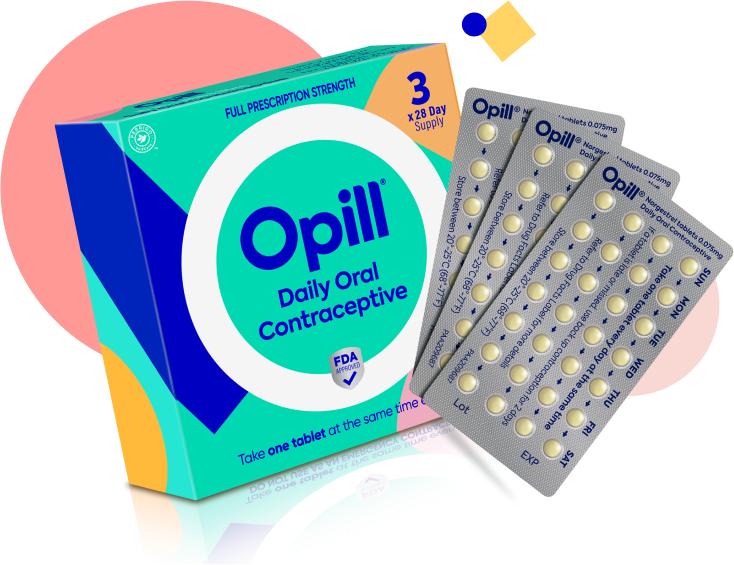
Opill® Contraceptive Pill and Periods
We know that exercise can affect periods but you may be wondering how birth control, like Opill®, affects your periods. When taking a contraceptive pill like Opill®, not everyone reacts the same.
Progestin-only contraceptive pills like Opill® should be taken at the same time every day, without a break between packs. This means that your periods may be less or more frequent, shorter or longer, or lighter or heavier than before you started Opill®. You may also have spotting or bleeding between periods.
If you have any questions about how Opill® may affect your cycle, please visit our frequently asked questions section.
Opill® 0.075 mg film-coated tablets contains progestin and is a daily oral contraceptive for women of childbearing age to prevent pregnancy.* Always read the instructions on the packaging carefully.
With Opill®, you’re in control of your choices, your contraception and your future.
*Do not use Opill® if you have or ever had breast cancer. See Opill® label for list of warnings.