Choosing a contraception method is all about finding what’s right for you. But not every option works the same way or for every situation. That’s why it’s important to understand the difference between daily birth control pills and emergency contraceptive pills (like ella® and Plan B).
Are emergency contraceptive pills the same as daily birth control pills? When should you choose one over the other? Let’s break down how daily birth control pills and emergency contraceptive pills work, so you can make informed choices and take charge of your reproductive health.
What are daily birth control pills?
Daily birth control pills, also known as the pill, contain hormones and are one of the most common and effective forms of hormonal contraception when taken as directed.1 They work to prevent pregnancy by taking one pill at the same time every day for maximum effectiveness. In most cases, daily birth control pills start working within several days if started correctly, but every product is different. For any daily birth control pill that you use, it’s important to read all label instructions and information carefully, including how and when to start, to ensure proper and effective use.
What are the main types of daily birth control pills?
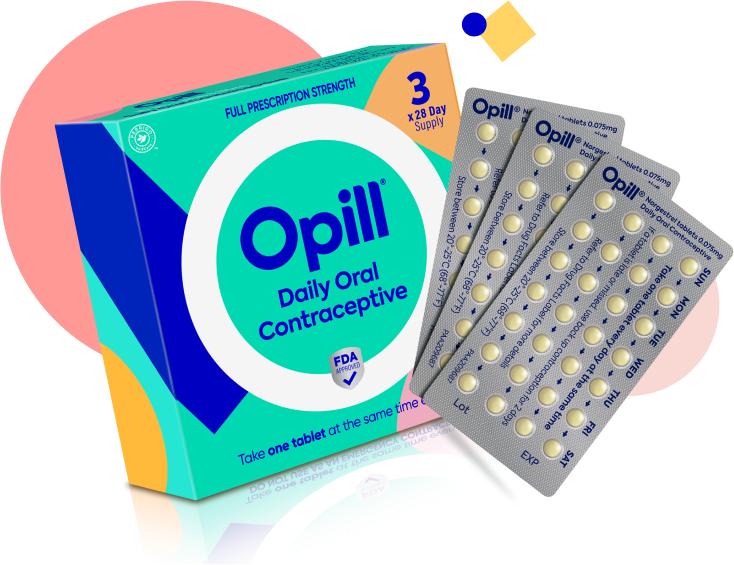
There are two main types of daily birth control pills: progestin-only pills (POPs) and combined oral contraceptives (COCs). POPs, like Opill®, contain progestin and are estrogen-free. On the other hand, COCs contain both estrogen and progestin. Understanding the difference between these options can help you choose the birth control pill that best fits your needs and lifestyle.
How do daily birth control pills work?
Daily birth control pills contain hormones, but they are not all the same. They work in different ways depending on the type of pill. COCs contain estrogen and progestin and primarily prevent ovulation. POPs, such as Opill®, contain progestin and mainly work by thickening cervical mucus to block sperm, and may also prevent ovulation in some cycles.
COC pill packs usually have 21 active pills (with hormones) and 7 placebo pills, or a 7-day break to allow for a period. POP packs have 28 active pills with no placebo week, and you take one active pill every day without interruption.
What are emergency contraceptive pills?
Emergency contraceptive pills (EC), also known as “morning-after pills”, are a single-dose pill used to reduce the chance of pregnancy after unprotected sex.2 They are not daily birth control pills and are not meant for regular birth control. EC pills, such as ella® or Plan B, can be used if a condom breaks, if you miss several daily birth control pills, or if no contraception was used during sex.
How do emergency contraceptive pills work?
Emergency contraceptive (EC) pills help prevent pregnancy by delaying ovulation2 — the release of an egg from the ovary — which prevents the sperm from fertilizing the egg. They are most effective when taken as soon as possible after unprotected sex; ideally within 24 hours. EC does not work if pregnancy has already occurred and cannot cause an abortion.
What are the types of emergency contraceptive pills?
There are two main types of morning-after pills: levonorgestrel and ulipristal acetate. Both are FDA-approved in the U.S.:
-
Levonorgestrel pills
contain a form of the hormone progestin. They are most effective when taken within 24 hours of unprotected sex and are effective for up to three days (72 hours) after unprotected sex. Common options include Plan B One-Step® and its generic versions. -
Ulipristal acetate
pills are most effective when taken within 24 hours of unprotected sex and are effective for up to 5 days (120 hours) after unprotected sex. ella® is a prescription-only emergency contraceptive pill with ulipristal acetate. If you are interested in taking ella®, consider asking your doctor about an advanced prescription so you have it on hand and can be prepared when you need it.
Both types of EC pills should be taken as soon as possible after unprotected sex.
What are the differences between daily birth control pills and emergency contraceptive pills?
Both daily birth control pills and emergency contraceptive pills help prevent pregnancy but they work in different ways and should be used in different circumstances. They also vary in prescription requirements, timing, and potential side effects.
Here’s a closer look at how each works and when to use them:
1. Purpose
- Daily birth control pills are designed to be taken every day and are a highly effective method to prevent pregnancy when used correctly.
- Emergency contraceptive pills, like ella® and Plan B, are designed as a single-dose emergency backup option after unprotected sex or if another birth control method fails. They are not designed to be used as a regular form of birth control.2
2. Timing of use
- Daily birth control pills are taken every day at the same time to maintain continuous pregnancy protection.
- Emergency contraceptive pills, on the other hand, are a single-dose product that are taken as soon as possible after unprotected sex to prevent pregnancy.
3. Effectiveness
- When taken exactly as directed, daily birth control pills are very effective at preventing pregnancy.4 For example, studies show that approximately 98 out of 100 sexually active women who used Opill® for a year did not become pregnant.5
Emergency Contraception pills work differently, and are most effective if taken within 24 hours after unprotected sex.
- Levonorgestrel pills (Plan B One-Step and generic equivalents) are effective up to 3 days following unprotected sex and are available over-the-counter.
- Ulipristal acetate pills (ella®) are effective up to 5 days following unprotected sex and are available by prescription.
4. Benefits
- When taken correctly, daily birth control pills are a highly effective proactive method of preventing pregnancy.
- Emergency contraceptive pills provide reliable emergency backup after unprotected sex or if a birth control method fails (e.g. broken condom). They are a single-dose and effective backup method for preventing pregnancy
5. Risks and Limitations:
- Daily birth control pills and emergency contraceptive pills do not terminate an existing pregnancy. Both may cause side effects that vary from person to person, and neither protects against sexually transmitted diseases (STDs). Both methods are less effective if not taken as directed. For guidance on individual risks, carefully read all the label information for the birth control method you choose and speak with a healthcare provider if you have any concerns.
6. Accessibility and prescription requirements in the United States
- In the U.S., most daily birth control pills require a prescription. However, Opill® is the first over-the-counter daily birth control pill, making it accessible in all 50 states in stores and online without a prescription.
- Prescription rules for emergency contraceptive pills depend on the type of pill. Ulipristal acetate pills (ella®) require a prescription, while levonorgestrel pills are available over the counter.
7. Potential side effects
- Some may experience side effects when taking daily birth control pills depending on the type of pill.
- Emergency contraceptive pills are generally safe and do not cause serious side effects. However, they may lead to short-term effects like nausea, headache, fatigue, or changes in your next period.2
Side effects affecting your period may vary depending on the individual and the type of birth control you use. Keep in mind that neither daily birth control pills nor emergency contraceptive pills protect against sexually transmitted infections (STIs).
Daily Birth Control Pills |
Emergency Contraceptive Pills |
|
Purpose |
|
|
Timing |
|
|
Effectiveness |
|
|
Benefits |
|
|
Is a Prescription Needed? |
|
|
Potential Side Effects |
|
|
Frequently Asked Questions
Can I use regular birth control pills as emergency contraception?
Daily birth control pills are not emergency contraception. Daily birth control pills, including Opill®, are designed for daily use and are safe and effective at preventing pregnancy when used as directed.
How often can I use oral emergency contraception?
Emergency contraceptive pills should not be used as a routine birth control method. It is not recommended to use ulipristal acetate more than once in the same menstrual cycle. If needed, you can take levonorgestrel more than once during a single menstrual cycle. If you are not using regular birth control, consider talking to your doctor about a reliable and effective birth control method that will work best for you.2
Does oral emergency contraception affect fertility?
Emergency contraceptive (EC) pills are considered safe and effective. They will not impact your ability to become pregnant in the future.
Can you use both daily birth control pills and oral emergency contraception?
Emergency contraceptive (EC) pills are intended for use after an instance of unprotected sex, for example if you forget to take your daily birth control pills.
If you used levonorgestrel EC, you can restart your daily birth control pills right away and you should also use a barrier method, like condoms, for the next 7 days.
If you used ulipristal acetate (ella®), you need to wait 5 days before starting or resuming daily birth control pills because using them together can reduce the effectiveness of both.5 You should use a condom every time you have sex until your next period after using ulipristal acetate. Always read all the label information for both the emergency contraceptive pill and your daily birth pill carefully and talk to your doctor or pharmacist if you have any questions.
Knowing Which Option to Use—and When
Making informed choices about your reproductive health starts with knowing which tools work best in which situations. Daily birth control pills provide steady, long-term protection, while the emergency contraceptive pill serves as a reliable backup when something unexpected happens. If you’re unsure which might be right for you, talk with your healthcare provider to help you navigate available options.
Key References
[1] American College of Obstetricians and Gynecologists. (2025, March). Birth control: Frequently asked questions for teens. https://www.acog.org/womens-health/faqs/birth-control
[2] American College of Obstetricians and Gynecologists. (2025, April) Emergency contraception. https://www.acog.org/womens-health/faqs/emergency-contraception
[3] Glasier AF, Cameron ST, Fine PM, et al. Ulipristal acetate versus levonorgestrel for emergency contraception: a randomized non-inferiority trial and meta-analysis. Lancet. 2010;13(9714):555-562.
[4] Cleveland Clinic. (2023, May 7). Birth Control Pill: Types, side effects & effectiveness. https://my.clevelandclinic.org/health/treatments/3977-birth-control-the-pill
[5] Perrigo Company. (2024). Opill® consumer information leaflet: What you need to know. https://cdn.shopify.com/s/files/1/0719/3211/7296/files/Opill-CIL.pdf
[6] Glasier, A., Sober, S., Gasloli, R., Goyal, A., & Laurora, I. (2022). A review of the effectiveness of a progestogen-only pill containing norgestrel 75 µg/day. Contraception, 105, 1–6. https://doi.org/10.1016/j.contraception.2021.08.016