Heavy Periods 101: What To Know About Heavy Menstrual Bleeding
If you’ve ever wondered “is my period too heavy?”, you’re not alone. Heavy menstrual bleeding is common. In fact, about one third of women seek help treating heavy periods — and you should always consult with your medical provider if you need help, too.
Before you type more questions into your search bar, let’s bring it back to basics. We break down what characterizes heavy periods, possible causes, and potential treatment options. With menstruation and contraception, knowledge is power — and you deserve to know your own body from day one.
What is heavy menstrual bleeding?
Heavy menstrual bleeding (HMB), also known as heavy periods or menorrhagia, is characterized by excessive or prolonged menstrual bleeding. Clinically, heavy periods are considered a loss of 80mL of blood or more in a single menstrual cycle.
Your perception of your bleeding is just as important as the actual amount of blood lost. Do you feel like your bleeding is more than you can manage easily? Don’t hesitate to consult with your doctor. After all, you know your body (and your bleeding pattern) best.
What are the symptoms of heavy periods?
In general, periods that last more than seven days or require a new tampon or pad after less than two hours of use are considered heavy. If you are passing large clots that are the size of a quarter or larger, be sure to see a doctor. While many individuals experience heavy menstrual bleeding, heavy periods look different for everyone.
According to the American College of Obstetricians and Gynecologists (ACOG), you may be experiencing heavy menstrual bleeding if you’re:
- Experiencing bleeding that lasts more than 7 days
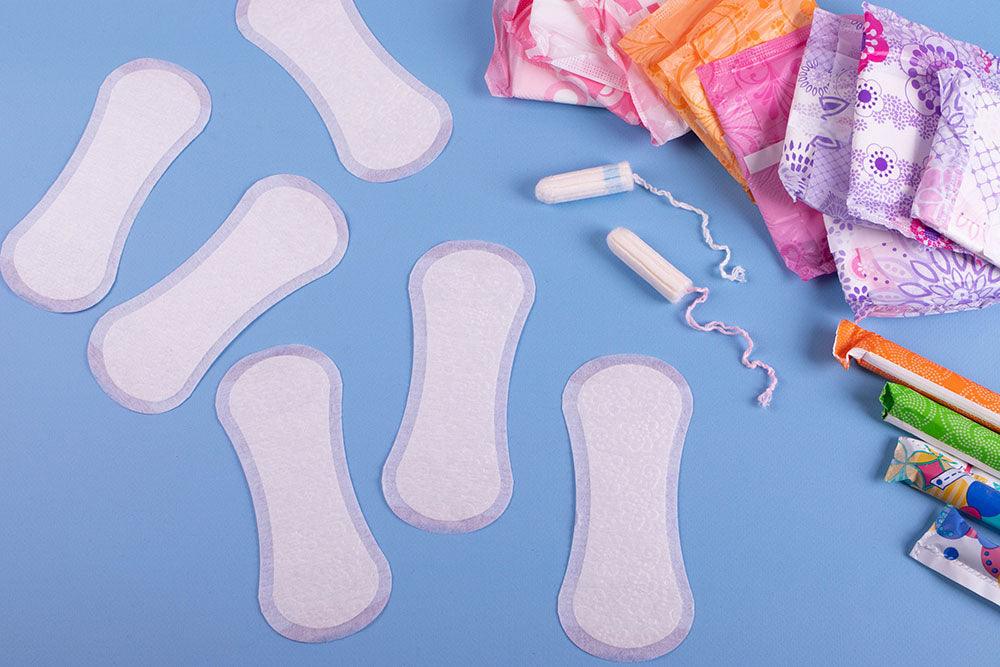
- Changing your preferred period product often or in the middle of the night
- Using two different, heavy flow period products at the same time (e.g. pads and tampons)
- Having periods every month that stop you from doing everyday activities
- Having consistent pain in the lower part of your stomach during periods
- Lethargic, tired, or regularly short of breath while on your cycle
What causes heavy periods?
There are a number of medical conditions that can cause heavy menstrual bleeding, although for some individuals the cause may remain unknown.
Some causes of heavy periods include:
Irregular ovulation
: Areas of the endometrium can become too thick if you don’t ovulate regularly. While this condition is common during puberty and perimenopause, heavy bleeding can also occur in individuals with certain conditions like anovulation, thyroid disease, or polycystic ovary syndrome (PCOS).Certain bleeding disorders
: Blood that doesn’t clot property can also lead to heavy menstrual periods. In some cases, your doctor may recommend testing for conditions like Von Willebrand disease (VWD) or platelet function disorders.Issues with the uterus
: Benign growths in the lining of the uterus or conditions that can cause cells in your uterus to grow improperly can cause heavy periods. Your doctor can evaluate for uterine polyps or fibroids as part of your general workup for heavy menstrual bleeding.Intrauterine Devices (IUDs)
: Non-hormonal copper IUDs may cause heavier periods in some individuals, especially in the first year of use.Certain cancers
: In some cases, heavy menstrual bleeding can be an early sign of endometrial cancer. Endometrial cancer is most common in post-menopausal women. Be sure to talk with a trained healthcare professional if you are concerned.Certain medications
: Certain medications used to treat or prevent blood clots can cause heavy menstrual bleeding (e.g. blood thinners).Other causes
: Endometriosis can cause heavy menstrual bleeding. Others may include those related to pregnancy, including miscarriage or ectopic pregnancy. Consult your OBGYN immediately if you experience unusual bleeding patterns while pregnant.It’s important for anyone experiencing heavy menstrual bleeding to consult with their doctor or healthcare provider so they can help identify the underlying cause and provide any necessary treatment.
How is heavy menstrual bleeding evaluated?
There are many tests and exams that can be used to evaluate heavy menstrual bleeding. For example, your healthcare provider may recommend a physical exam, including a pelvic exam alongside several tests including blood tests, pap tests (also known as Pap smears), or other lab tests. Imaging techniques may also be used by your healthcare provider to help diagnose heavy menstrual bleeding, such as a pelvic ultrasound, MRI, and hysteroscopy, among others. According to the ACOG, you may also undergo a pregnancy test or relevant tests for certain sexually transmitted diseases (STDs).
From a hysteroscopy to an endometrial biopsy, additional tests may be needed depending on your specific age and symptoms.
What is the best treatment for heavy periods?
Heavy periods don’t always need to be treated. However, heavy menstrual bleeding can significantly impact a person’s quality of life. Luckily, there are treatments available depending on what’s causing the bleeding and how severe it is. Doctors will also consider your health, age, and medical history.
If heavy periods become difficult to manage, treatment options can help. Various medications can help with heavy bleeding. Some hormonal contraceptives, like specific hormonal IUDs or birth control pills, can help treat heavy menstrual bleeding.
If medication does not improve bleeding or is not an option, there are different types of surgical procedures that your doctor might recommend. Examples include endometrial ablation (destroys lining of uterus), uterine artery embolization (to treat fibroids), and myomectomy (to remove fibroids). Some hormonal contraceptives, like specific hormonal IUDs or birth control pills, can help treat heavy menstrual bleeding. Be sure to talk with your provider about your health concerns and specific treatment goals so they can recommend the ideal approach.
Do birth control pills cause heavy bleeding?
Birth control pills don’t usually cause heavy periods. However, some birth control methods may affect your period in some way. For example, different types of birth control pills — including progestin-only pills (POPs) and combined oral contraceptive (COC) pills containing estrogen and progestin — may affect your menstrual bleeding pattern.
For example, a common side effect of POPs is irregular bleeding. Some people may experience regular periods that align with their natural cycle, while others may have lighter or more frequent bleeding [2].
No matter which birth control pill you’re taking, you may experience irregular spotting or bleeding during the first few months of taking the birth control pill. Spotting may also result from forgetting to take a pill or taking it late. Taking your pill even a few hours later than normal may cause spotting. Be sure to speak with your doctor when exploring new birth control pill options to find the right pill for you.
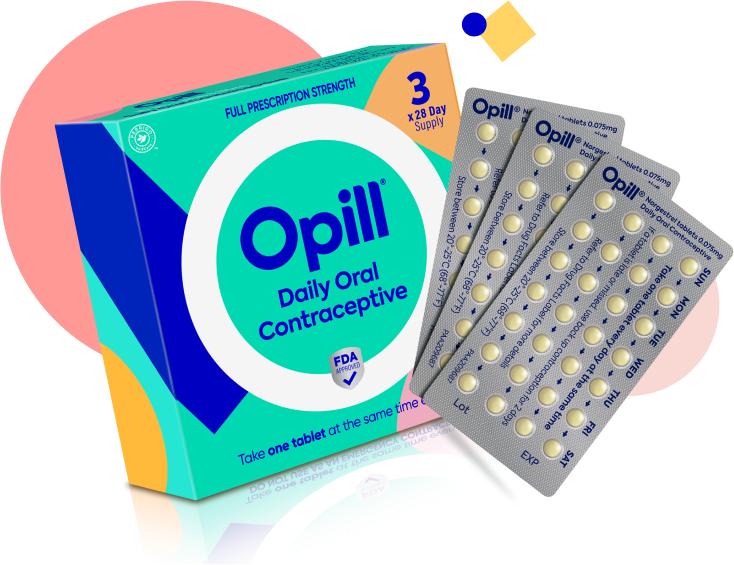
Can Opill® cause heavy periods?
It depends as everyone’s body may react differently. Your periods may be less or more frequent, shorter, or longer, lighter or heavier than before you started Opill®. You may also have some spotting or bleeding between periods and some women stop having periods altogether. As with many birth control options, most changes to periods are to be expected when taking a new form of contraception.
Continue taking Opill® exactly as directed, even if you have the following changes to your periods:
- You experience changes in your period such as less or more frequent, shorter, or longer, lighter or heavier than before you started taking Opill®, or if you have some spotting or bleeding between periods.
- You stop having periods while taking Opill®, as can happen with some women.
- Be sure to take a pregnancy test or talk to a doctor if your period is late after missing any tablets in the last month, if you have not had a period for 2 months, or if you think you may be pregnant.
Can you use Opill® if you have heavy periods?
Yes, you can use Opill® even if you have heavy periods.* Talk to your doctor if you are looking for birth control for heavy periods or for more information.
When should I seek help for heavy bleeding or change my contraception?
If your heavy menstrual bleeding isn’t improving, don’t hesitate to consult with your doctor or healthcare provider for advice. Remember: the best treatment for heavy bleeding depends on your unique needs.
You deserve the freedom and control to get safe and effective birth control or daily oral contraception easily. Opill® is here to provide you with that.
*Do not use Opill® if you have or ever had breast cancer. See Opill® label for a list of warnings.
†Always read the consumer information leaflet included with your preferred form of birth control.
Key References
- Heavy Menstrual Bleeding. American College of Obstetricians and Gynecologists. https://www.acog.org/womens-health/faqs/heavy-menstrual-bleeding. Reviewed May 2024. Accessed December 2024.
- Progestin-Only Hormonal Birth Control: Pill and Injection. American College of Obstetricians and Gynecologists. https://www.acog.org/womens-health/faqs/progestin-only-hormonal-birth-control-pill-and-injection. Reviewed November 2024. Accessed December 2024.
- Heavy Menstrual Bleeding. YourPeriod. https://www.yourperiod.ca/abnormal-pain-and-menstrual-bleeding/heavy-menstrual-bleeding/. Accessed December 2024.
- Menorrhagia (Heavy Menstrual Bleeding). Cleveland Clinic. https://my.clevelandclinic.org/health/diseases/17734-menorrhagia-heavy-menstrual-bleeding. Reviewed July 2024. Accessed December 2024.
- Von Willebrand Disease. Mayo Clinic. https://www.mayoclinic.org/diseases-conditions/von-willebrand-disease/symptoms-causes/syc-20354978. Published October 2021. Accessed December 2024.
- Birth Control and Your Period. YourPeriod. https://www.yourperiod.ca/normal-periods/birth-control-and-your-period/. Accessed December 2024.
- Opill Consumer information leaflet What you need to know. (n.d.). https://cdn.shopify.com/s/files/1/0719/3211/7296/files/Opill-CIL.pdf