If you’re aged 45 or over, you may be wondering whether you still need to use contraception and what would be a suitable method of birth control for your age group. At age 30, fertility starts to decline. The decline is faster in mid-to-late 30s, and by 45 fertility declines enough that becoming pregnant is unlikely but it is still possible. Until you reach menopause – meaning you’re over 50 and you haven’t had a period for a year (12 months in a row) – there is a chance you could get pregnant. If you would like to avoid pregnancy, you should think about using contraception.
Which type of birth control is suitable for you depends on several factors, such as your personal and family medical history, your menstrual cycle, your sexual activity and your preferences. In this article, we will explore some of the best birth control options for older women and some of the benefits and risks of using them.
Safe Birth Control Options
You might think premenopausal women don't need to use contraception, but unplanned pregnancies among women over the age of 40 aren't unheard of. In fact, the CDC estimated 31.6% of pregnancies among women 40 and older were unintended. During perimenopause, some women do experience irregular menstrual cycles, sometimes going two, three, or even six months between periods, before returning to a more consistent monthly cycle. Since ovulation can still occur during this transitional stage, contraception can be an important consideration for women who wish to avoid pregnancy.
There are blood tests to measure certain hormone levels, like follicle stimulating hormone (FSH), and suggest that a woman has reached menopause. But these tests can be misleading because FSH levels naturally go up and down at this time.
The only reliable way to know if you have reached menopause is to look back at your menstrual history -if you have not had a period for a year or more you have reached menopause and can stop using contraception. However, if you are using hormonal contraception such as daily birth control pills, the patch, the vaginal ring or hormonal injection, your periods may be affected by the hormones and not reflect your natural cycle. Hormonal birth control may hide other symptoms of menopause too.
Explore Your Contraception Choices
There are many different methods of contraception available in the US and age alone does not make any birth control method automatically unsuitable for women in their 40s and beyond. The birth control that is most suitable for you will depend on your medical history and your preferences. Remember that you can always discuss your options with a doctor, sexual health nurse or, in some cases, a pharmacist if you have any questions or concerns.
Some of the factors that may influence your decision include:
- Effectiveness: some methods are more effective than others at preventing pregnancy. For example, long-acting reversible contraceptives (LARCs), such as implants, IUDs and IUSs, are more than 99% effective and don’t require action daily or every time you have sex.
- Risk of sexually transmitted infections (STIs): most contraceptive methods do not protect against STIs. Condoms – male or female – are the only contraceptive method that can also protect you from STIs. If you have multiple sexual partners, are sleeping with a new partner or are not sure of your partner’s status, you should use condoms in addition to any other method of contraception to reduce your risk of STIs.
- Medical history: some contraceptive methods may not be suitable for you if you have specific medical conditions or risk factors. Some examples of these medical conditions are high blood pressure, diabetes, heart disease, stroke, or blood clots and if you have or ever had breast cancer. You should review any health conditions and medications you take with your doctor before choosing a method of contraception.
- Menstrual symptoms: some contraceptive methods may affect your periods and cause them to be lighter, heavier, change in frequency or stop altogether. Speak to a doctor or pharmacist for help to understand these potential changes so that you can choose a method that suits your needs.
- Personal preferences: some methods may suit your lifestyle and preferences better than others. For example, some people prefer a method they can start and stop themselves, while others may prefer long-acting options. You may also have a preference between hormonal and non-hormonal methods, depending on your individual needs.
Whichever contraception method you choose, be sure to read all the label information and use as directed.
Common Methods of Contraception
Before diving in, it is important to read all label information on any birth control method to ensure that it is right for you. With that being said, here are some of the most common methods of contraception for you to compare.
Combined Pill
The combined pill contains two hormones: estrogen and progestin. It works by stopping ovulation (the release of an egg) and thickening cervical mucus to create a barrier against sperm.
The combined pill may also not be suitable for some women and people with uteruses over the age of 35 who smoke or have high blood pressure, and it may increase the risk of certain conditions such as blood clots and breast cancer. Combined hormonal contraceptives are also not recommended for women and people with uteruses who have migraine with aura, and those who have high blood pressure, cardiovascular disease, a history of stroke, venous thromboembolism (VTE), congenital/valvular heart disease with complications, breast cancer or women and people with uteruses who are aged 50 or older.
The combined pill also does not protect against sexually transmitted infections (STIs), and you must remember to take it every day. Speak to your doctor if you’re considering taking the combined contraceptive pill so they can look at your individual situation and help you make an informed decision.
Progestin-Only Pill

This is a pill that contains only progestin, a hormone that thickens the cervical mucus to help block sperm from reaching the egg and prevent ovulation in some cycles. It can be used by most people who can get pregnant* including those who have a contraindication to estrogen, such as those who have high blood pressure or migraine with aura, are breastfeeding or who are smokers over 35.
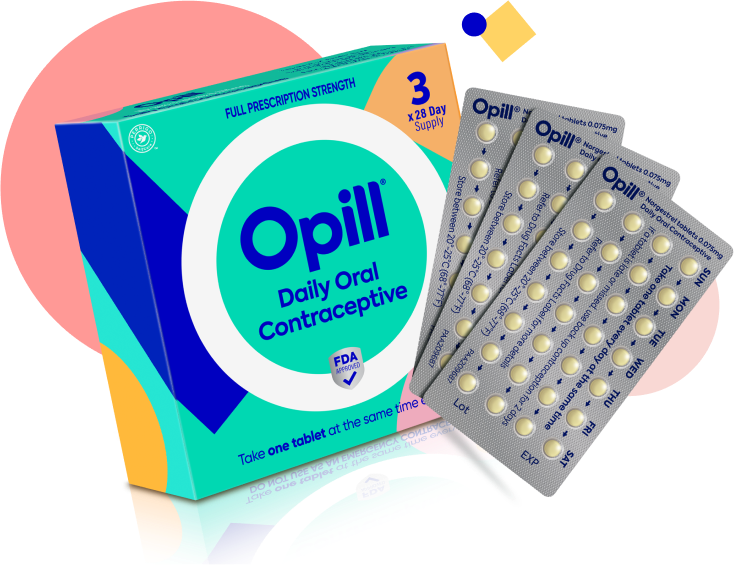
Progestin-only daily birth control pills are not suitable for people who have or ever had breast cancer. They must be taken at the same time every day, within a 3-hour time frame. You can buy progestin-only pills, like Opill®, over the counter at most retailers nationwide or online without a doctor’s appointment or prescription.
Contraceptive patch
A birth control patch is a thin, square patch that sticks to your skin and continuously releases the hormones estrogen and progestin into your bloodstream. It works in the same way as the combined pill, and you only must change it once a week for three weeks in a row, followed by a patch-free week. It may make your periods lighter, shorter and more regular. There are some people for whom the patch is not suitable including those with a BMI equal to or over 30, or those who smoke and are over 35 and individuals with high blood pressure, diabetes, heart disease, migraines with aura or a history of blood clots or breast cancer.
Vaginal ring
Thie vaginal ring, also known as the birth control ring, is a flexible, transparent ring that is inserted into the vagina. It’s inserted and left in place for three weeks and then removed for one week. It releases a continuous low dose of estrogen and progestin into your bloodstream and works in the same way as the combined pill or patch. There are some people for whom the vaginal ring is not suitable including those with a BMI equal to or over 30, or those who smoke and are over 35 and individuals with high blood pressure, diabetes, heart disease, migraines with aura or a history of blood clots or breast cancer.
Contraceptive injection

The birth control shot is an injection that contains a type of progestin and is administered every three months (12 to 13 weeks). The shot prevents ovulation and thickens the cervical mucus. It requires regular visits to your doctor or nurse for injections. Speak to your doctor or sexual health nurse for more information about whether the injection is the right choice for you.
Contraceptive implant

The contraceptive implant, also known as birth control implant, is a long-acting, reversible contraceptive. A small rod is inserted under the skin of your upper inner arm by a doctor or nurse practitioner. It releases progestin into your bloodstream and prevents ovulation and thickens the cervical mucus. It can remain inserted for up to three years and must be removed by a doctor or nurse practitioner. Speak to your healthcare provider to see if the implant is the right choice for you.
Hormonal Intrauterine Device (IUD)

This is a small plastic device that is inserted into your uterus by a doctor or nurse practitioner. Hormonal IUDs are LARC (long-acting reversible contraceptives). Some people prefer IUDs because once they’re inserted it will prevent pregnancy for around 3-8 years, depending on the brand. IUDs release a small amount of progestin directly into the uterus and prevents fertilization by thickening the cervical mucus, thinning the uterus lining, and making the uterus environment less favorable for sperm. Some people find the procedure to get it inserted and removed uncomfortable, so speak to a doctor or nurse about your preferences and options.
Copper Intrauterine device (IUD)

A copper IUD is a small, T-shaped, hormone-free, copper device that is inserted into your uterus by a doctor or nurse practitioner. It is a LARC and prevents pregnancy for up to 10 years depending on the type. It prevents fertilization and implantation of a fertilized egg by creating an inhospitable environment for the sperm. It requires a doctor or nurse practitioner to insert and remove it.
Male condom

Male condoms are a barrier method of birth control that are usually made of thin rubber latex, and they cover the penis during sex and collect the sperm. Condoms prevent pregnancy and sexually transmitted infections (STIs). They are cheap, widely available, and effective when used properly. Using condoms plus another form of birth control is a great way to get pregnancy and STD protection. Condoms require cooperation from your partner and must be used every time you have sex. If you are experiencing vaginal dryness, choose a pre-lubricated condom or use water-based lubricants to help improve the experience. Avoid oil-based lubricants, however, as they can make condoms more likely to break.
Internal condom
Internal condoms, also called female condoms, are a thin polyurethane pouch that lines the vagina during sex, creating a barrier that collects the sperm. It prevents pregnancy and STIs. It is cheap, widely available, and effective when used properly. They can be difficult to insert, and they also require cooperation from your partner and must be used every time you have sex.
Fertility Awareness Method

Fertility awareness, also known as natural family planning, the calendar method, or the rhythm method, involves monitoring and tracking your menstrual cycle body temperature and cervical mucus to identify your fertile days when you’re most likely to conceive. On those days, you would avoid sex or use another method of contraception. These methods can help prevent pregnancy without using any hormones or barrier methods. It can also help you understand your body and cycle better. However, it requires daily observation and recording and can be very difficult to be consistent with, and it also requires abstinence or backup contraception on your fertile days. It’s important to know that ovulation can be difficult to predict and these methods also may not be reliable if you have irregular cycles, illness, stress or medication that affect your signs.
Sterilization
If you do not want or are done having children, sterilization is a permanent method of birth control. In women, sterilization is called tubal ligation and in men it is called a vasectomy. Tubal sterilization requires a medical procedure which involves the fallopian tubes being blocked or sealed to prevent the eggs reaching the sperm and becoming fertilized.
For vasectomies, a surgeon cuts and seals the vas deferens tubes that carry sperm, preventing the release of sperm during sex.
A vasectomy is a low-risk surgery. Most often, the procedure is done with medicine called a local anesthetic in a health care professional’s office. That means you stay awake and have medicine to numb the surgery area. You'll most likely go home the same day as the surgery. This is called outpatient surgery.
How do you know when you can stop using birth control?
You can stop using birth control when you no longer need to prevent pregnancy, you have reached menopause, or you are not sexually active. There is no test that can tell for certain whether you have reached menopause, but if you have not had a period for 12 months in a row you have reached menopause.
Some methods of birth control can mask the signs of menopause, such as the combined pill, patch or ring, which may still cause some bleeding even if your period has naturally stopped. Other methods of birth control can cause irregular bleeding or spotting, such as the progestin-only pill, injection, implant or IUDs, which make it hard to tell if your periods have stopped.
If you are using one of these methods and want to know if you are menopausal, you may need to stop using them for a while and see if your periods return or not. You should use another method of contraception during this time if you do not want to get pregnant.
Alternatively, you can ask your doctor for a blood test to measure your levels of follicle stimulating hormone (FSH), which can indicate if you are becoming menopausal. However, this test is not very reliable in women over 45 as FSH levels naturally go up and down during this time.
The best way to decide when to stop using birth control is to talk to your doctor or nurse about your options and preferences. They can help you choose a method that suits you best until you reach menopause.
Key References:
1. https://www.cdc.gov/nchs/data/series/sr_02/sr02-201.pdf
2. https://health.clevelandclinic.org/birth-control-during-perimenopause
3. https://my.clevelandclinic.org/health/diseases/21841-menopause
4. https://www.mayoclinic.org/tests-procedures/vasectomy/about/pac-20384580