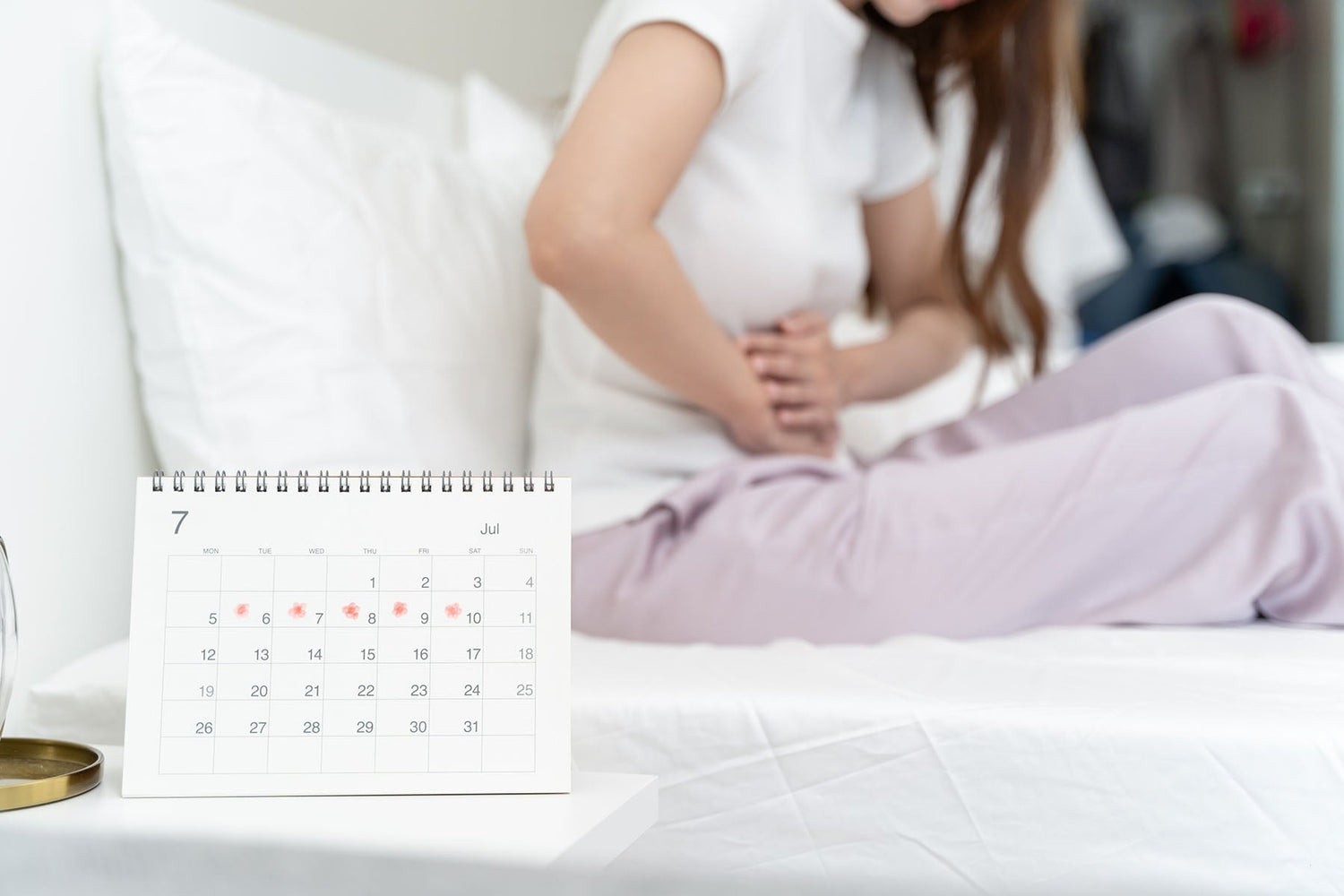
Even if you’re not sure what it is, there’s a pretty good chance you’ve heard of premenstrual syndrome (i.e. PMS). Towards the end of your cycle before your period starts, you may feel moodiness, breast tenderness, cravings and other minor symptoms which are normal. However, if you experience symptoms that are more severe and hard to cope with, or if they affect your normal activities, you may have PMS. Read on to find out more about premenstrual syndrome and how it may affect you.
What does PMS stand for?
PMS stands for premenstrual syndrome, which is refers to severe symptoms that some women experience in the days before menstruating. PMS occurs specifically during the luteal phase, which starts around two weeks before your period starts. Although we don’t know precisely why it happens the way it does, hormones are involved.
Approximately two weeks before your period, a peak in estrogen helps to trigger ovulation, followed by a drop in estrogen. During the luteal phase estrogen begins to rise again, while progesterone levels also rise in order to help prepare your uterus to support a potential fertilized egg… or menstruation occurs. But it’s those fluctuations that are thought to cause those uncomfortable premenstrual symptoms and, for some, PMS.
Who has PMS?
It is believed that most women and people with ovaries will experience premenstrual symptoms at some point during their lives. Menstruation is regulated by a number of hormones that can also interact with the hormones that regulate mood, have effect on bodily functions, and contribute to PMS. There is also a chance the symptoms will become more severe as you near menopause and your hormonal cycles transition and change. This is thought to quite often begin as you reach your late 30s or 40s. It isn’t clear why some women have severe symptoms while other women don’t.
What are the symptoms of PMS?
As previously mentioned, you might not experience anything at all, let alone anything too severe. Everyone’s experience is different, and you may also get different symptoms during different cycles. Some people may experience a wide range of symptoms to varying levels, and these can include:
- Mood swings
- Exhaustion or fatigue
- Bloating
- Stomach pain
- Headaches or migraines
- Hormonal acne (causing spots or even cysts)
- Changes to your appetite
- Changes to your libido
- Breast tenderness
What is PMDD?
Premenstrual dysphoric disorder, or PMDD for short, is a rare and severe type of PMS. It can present with the same symptoms as PMS (though potentially significantly heightened), along with additional and more concerning disruptions in mood such as depression, irritability, anxiety, vomiting, hot flashes, and more. It is a condition that can be disruptive to your daily life. If you think that you might be suffering from PMDD, particularly if it is hindering your ability to carry out your routine, it’s a good idea to speak to your healthcare provider about treatment options.
How can we treat PMS/PMDD?
For most people, the physical symptoms of PMS can usually be managed with home remedies including a heating pad, over the counter painkillers and appropriate rest or exercise depending on what feels right for you. To address the emotional and mental symptoms, it may be helpful to engage in exercise, reduce sugar and salt, cut down on caffeine and alcohol, and explore other self-care methods. However, if your symptoms are severe and significantly impair your ability to work, study, or socialize as usual, it might be worth discussing other treatment options with your healthcare provider.
Does the contraceptive pill affect PMS?
Hormonal contraception can help some people manage PMS symptoms, but it doesn’t work the same for everybody. For example, some contraceptive pills help prevent pregnancy by preventing ovulation and may lessen the physical symptoms. If you have questions about how hormonal contraception may help your PMS, reach out to your healthcare provider to discuss your options.
PMS symptoms vs. pregnancy symptoms
There is some overlap between PMS and pregnancy symptoms. Pregnancy-related bloating can be mistaken for bloating before a period. The two also share in common things like mood swings, cramping, and headaches.
The biggest sign that you might be experiencing pregnancy symptoms rather than PMS? A missing period. Take a pregnancy test or talk to a doctor if your period is late and you think you may be pregnant.
Why is there a stigma around PMS?
Period shaming is real. Despite being common and treatable, PMS is sometimes trivialized in everyday conversation. Dismissing emotional reactions as “just hormonal” or using premenstrual symptoms as a punchline can reinforce old stereotypes and stigma.
Unfortunately, this stigma also discourages people from seeking care for PMS. Experiencing PMS does not make your feelings any less valid or give anyone the right to treat you badly, and one way that we can combat this is through proper education. If you think you might have PMS or PMDD, know that your concerns are valid. Talk to your healthcare provider about the symptoms you are experiencing, and explore resources online that can help to give you support, education and some helpful tools.
You can also read more about what might happen to your period while you’re on Opill and find other useful information regarding birth control here.
References
- American College of Obstetricians & Gynecologists. Every Stage Health. Premenstrual Syndrome (PMS). https://www.acog.org/womens-health/faqs/premenstrual-syndrome Accessed October 2025.
- Society of Obstetricians & Gynaecologists of Canada. Your Period. Abnormal Pain and Menstrual Bleeding. https://www.yourperiod.ca/abnormal-pain-and-menstrual-bleeding/premenstrual-syndrome-pms/ Accessed October 2025.
- https://www.womenshealth.gov/menstrual-cycle/premenstrual-syndrome
- https://www.mayoclinic.org/diseases-conditions/premenstrual-syndrome/diagnosis-treatment/drc-20376787
-
Premenstrual Syndrome (PMS) | ACOG