Wondering if birth control pills cause you to gain weight?
It is one of the most common concerns about starting birth control pills, so you are not alone! We help to break this question down for you so you can feel confident in your decision about starting birth control.
Can hormonal birth control cause weight gain?
The American College of Gynecologist and Obstetricians (ACOG) is working to clear up misinformation about hormonal birth control, including for weight gain. There have been no studies that show a causal link between hormonal birth control and weight gain. This may be surprising but it’s important to remember that many people start hormonal birth control at a time when they may still be growing and when they experience normal weight fluctuations.
A systematic review of 22 studies of progestin-only contraceptives (injection, IUD, implant, oral contraceptive) found that the average weight gain at 6 or 12 months was less than 4.4 pounds for most of those studies.
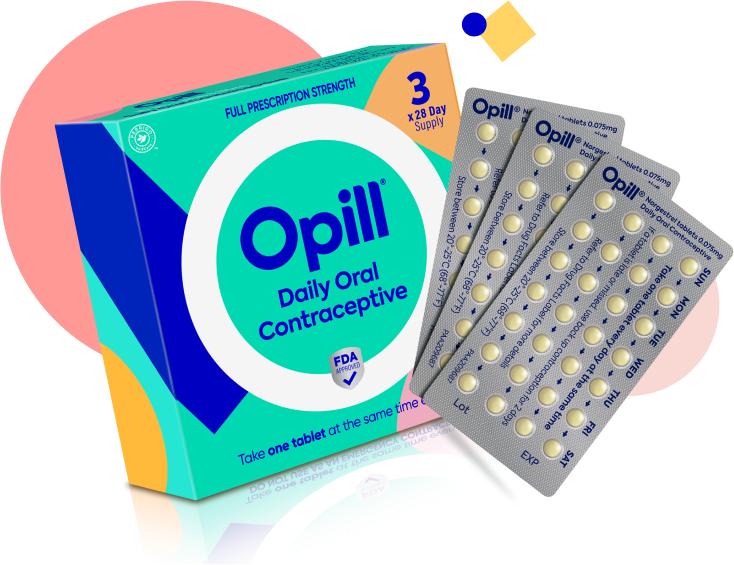
Opill® is a progestin-only daily oral contraceptive and has not been shown to cause weight gain.
Learn more about other side effects of Opill® here.
Why do some notice changes in their weight?
When people gain weight, it’s usually due to one of three factors: fluid retention, increase in muscle mass or an increase in body fat.
While there has been no definitive link between hormonal birth control and weight gain, there are many other reasons someone may gain weight. Your weight also naturally fluctuates and it’s common to see a slightly different number on the scales even within the same day. While slight weight gain could be a result of birth control pills, you should also consider whether anything else in your routine has changed.
If you are concerned that your contraceptive pill has caused you to gain weight, you should speak to your doctor or pharmacist for advice.
Why do some people notice weight changes on birth control pills?
Fluctuations in weight are perfectly normal. While some people do notice a slight increase in their weight after starting a new birth control pill, it’s important to remember that there are many factors that can lead to weight changes.
For example, many individuals begin taking hormonal birth control during life stages when natural growth and body composition changes are still occurring, which can lead to normal weight fluctuations. Additionally, some forms of hormonal birth control may cause increased water retention for some people which can result in increased weight without reflecting true weight gain.
Tips to maintaining a healthy weight
Maintaining healthy body weight is important for your physical, emotional, and mental wellbeing. We’ve provided some helpful tips below and you can reach out to your healthcare provider for additional help.
Nutrition
A healthy, balanced nutrition plan is a great way to help manage weight.
As with most things in life, there is no one-size-fits-all nutrition plan. Focusing on whole foods like vegetables, fruits, nuts and seeds and whole grains can help fuel your body for all the amazing work it does. It is important to incorporate carbs, protein, and fats with your meal as all contain essential nutrients! It’s recommended that women eat around 1,500-2,000 calories a day depending on lifestyle, activity, age and other factors. It’s important that you don’t eat too few calories because you won’t have adequate energy to support body and its important activities throughout the day.
Exercise
Exercise is important for weight management because it burns excess calories which may otherwise be turned into fat, but there are plenty of other benefits. Regular exercise helps support your mental health, can build muscle and endurance, and is a great tool to combat other health issues. Some types of exercise include cardio like running or walking, weight training, swimming, yoga, cycling, dance, pilates and many more! It’s important that you find a type of exercise you enjoy and can incorporate into your routine.
Drinking Water
Last, but certainly not least, make sure you’re drinking plenty of water. Drinking enough water can help you feel fuller for longer, plus you’ll feel well hydrated and it’s great for your skin!
The bottom line about birth control and weight gain.
The bottom line is that hormonal birth control has not been definitively linked weight gain.
Remember, you are an expert in your own body and there isn’t one type of birth control that is best for everyone. Your healthcare professional we be able to help you consider your options and choose a birth control method that is right for you.
If you can’t or don’t want to book a doctor’s appointment, Opill® is a progestin-only contraceptive pill that is available to buy over the counter without a prescription. You can buy a one month or three month pack to start with, so you can see whether it works for you. Find out more about Opill® here.
Sources:
American College of Obstetricians and Gynecologists. Facts are Important: Hormonal Birth Control. May 2024. https://www.acog.org/advocacy/facts-are-important/hormonal-birth-control Accessed November 2025.
Reproductive Health Access Project. Contraceptive Pearl: Hormonal Birth Control & Weight Gain. March 2022. https://www.reproductiveaccess.org/resource/contraceptive-pearl-hormonal-birth-control-weight-gain/ Accessed November 2025.
Lopez L, Ramesh S, Chen M, et al. Progestin-only contraceptives: effects on weight. Cochrane Database of Systematic Reviews. 2016, Issue 8. Art. No.: CD008815. DOI: 10.1002/14651858.CD008815.pub4. Accessed 11 November 2025.